
INTERVIEW · EUROPE · UKRAINE · RUSSIA · SECURITY
Dr Susan Stewart: Russia will remain Europe’s greatest security challenge
Dr Susan Stewart, Senior Fellow at Stiftung Wissenschaft und Politik (SWP), the German Institute for International and Security Affairs, argues that the war in Ukraine has permanently changed Europe’s political future and that meaningful change in Russia is likely to require generations
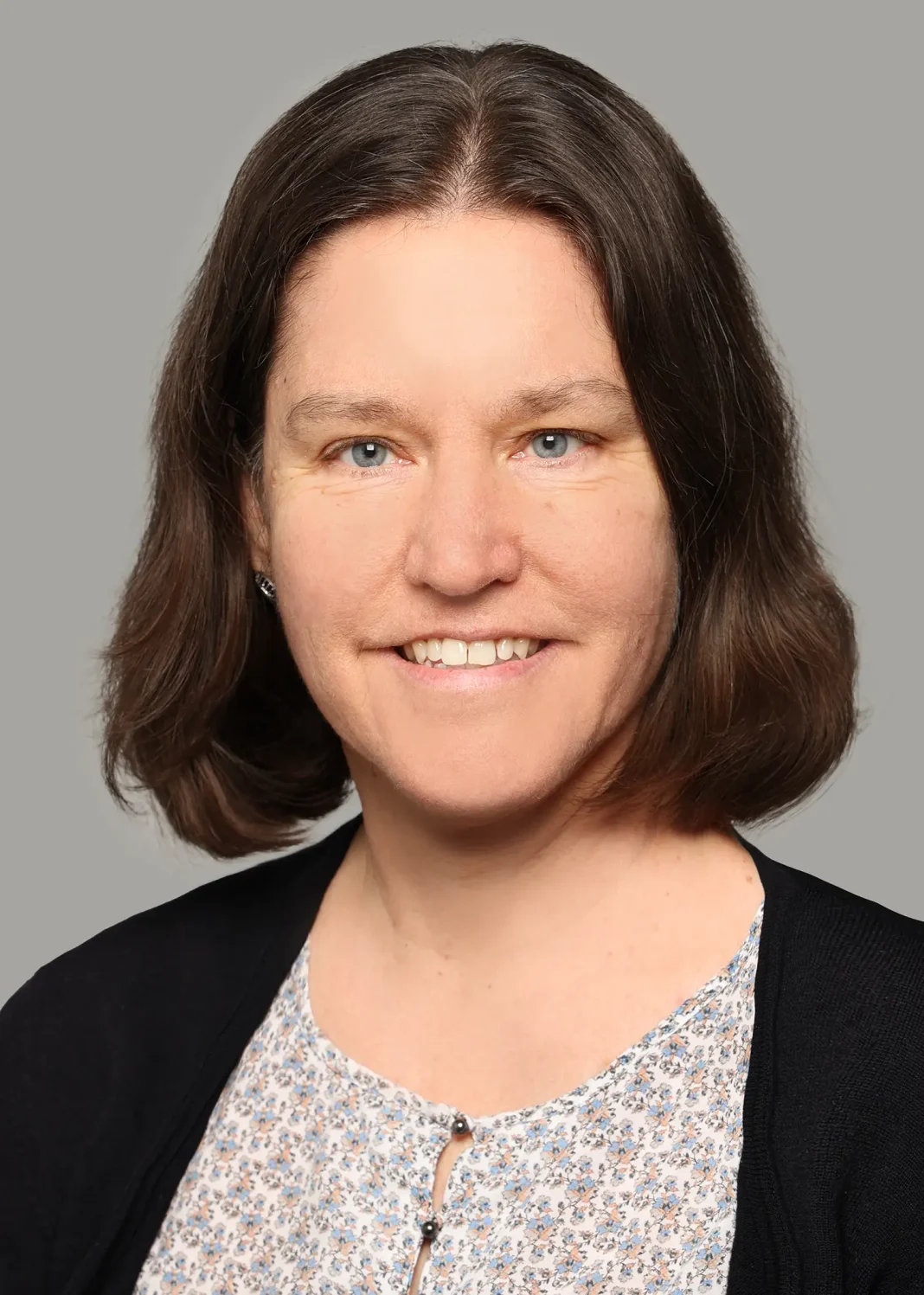
Russia’s full-scale invasion of Ukraine has changed Europe’s political future, according to Dr Susan Stewart, Senior Fellow in the Eastern Europe and Eurasia Research Division at Stiftung Wissenschaft und Politik (SWP), the German Institute for International and Security Affairs, in Berlin. Dr Susan Stewart also co-leads the SWP Working Group “Reordering European Security”.
In a written interview with Arcana News, Dr Susan Stewart discusses Ukrainian resilience, the role of civil society, the future of Europe’s security architecture and the persistence of Russia’s long-term strategic objectives beyond Vladimir Putin.
The interview follows.
Has Russia’s war against Ukraine permanently changed Europe’s political future?
Yes, both Russia’s decision to conduct a full-scale invasion of Ukraine and Ukraine’s courageous and effective defence have changed Europe’s future. The brutal, massive and unprovoked attack by Russia convinced many politicians, policymakers and citizens in Europe of the violent imperialist nature of the Russian regime. This created a critical mass in the EU and Europe more broadly to radically change the approach towards Russia. However, this shift would not have taken place if not for the brave and innovative response of the Ukrainian armed forces, political actors, and society to Russia’s war on Ukraine. The Ukrainian actions persuaded other European states and societies that Ukraine is worth supporting and that it is possible to push back effectively against the Russian army and regime.
Whereas previously most of Europe was willing to tolerate the presence of a “grey zone” between the EU and Russia, and attempting to devise ways of getting along with Moscow, now the vast majority of European states have opted for a different model, which offers Ukraine (and Moldova) integration into the EU, while sanctioning and partially isolating Russia. Even if political forces should come to power in Europe that would be inclined to alter this dynamic, it will be difficult for them to do so. They may nonetheless attempt it, but since Ukrainians will not allow their state, nation and culture to be sacrificed to Russia, such attempts will only lead to further instability and perhaps even to a split within Europe regarding the security architecture it intends to pursue.
What aspect of Ukrainian resilience is still underestimated in Western Europe?
All aspects of Ukrainian resilience are still underestimated, because it is simply not possible to appreciate the extent and impact of this resilience without experiencing its wartime context. In particular, the capacity of Ukrainians to undergo material deprivation and trauma and nonetheless continue to support their armed forces for four and a half years despite growing exhaustion should be emphasized. Especially because in many cases the state has not been able to fulfil all of its functions in terms of supplying equipment, housing IDPs (internally displaced persons), etc., so it is Ukrainian society that has been carrying out these tasks in a consistent and increasingly organized fashion.
What should European policymakers understand better about civil society in Eastern Europe?
I will speak about Ukraine in particular, since I am most familiar with it. One important thing to understand is that because of the strength of Ukrainian civil society, it has become an essential supplement to the state in Ukraine. So going forward we need to reflect on the question of an appropriate model of state governance in Ukraine that takes this strength into account and uses it to the country’s benefit, while at the same time working to strengthen the state institutions and render them more accountable.
Looking beyond the current conflict, what do you believe will be the greatest challenge to Europe’s security architecture during the next decade?
Russia will remain the greatest challenge to Europe’s security architecture. Without the incorporation of Russia into this architecture, insecurity in Europe will remain pronounced. But for the foreseeable future it is impossible to include Russia as a constructive force within this architecture. The Russian goals of destabilizing Europe through cyberwarfare, disinformation, attacks on critical infrastructure, acts of sabotage, and potentially more blatant kinetic attacks in the future mean that Europe will have to pursue an approach of deterrence and containment of as well as defence against Russia in the upcoming years, and probably decades.
Because of Russia’s proximity to the rest of Europe, its combination of inferiority and superiority complexes with regard to Europe, and its military power paired with economic underdevelopment, it will remain a more immediate challenge than other problematic countries or even than major issues concerning e.g. the environment or the development of artificial intelligence.
In your view, what is the most common misunderstanding in Western Europe about Russia’s long-term strategic objectives?
That they are somehow dependent on the Russian leader of the moment. It is highly unlikely that the Russian leaders who follow Vladimir Putin will have a fundamentally different view of the geopolitical situation than he does. European leaders need to come into power with a better understanding that they will not be more successful than their predecessors at convincing Russia to be a constructive actor.
This is not to say that it is impossible for Russia to change, but due to a complex variety of historical, sociological, geographical, economic and psychological reasons, meaningful change is likely to require generations. Unfortunately, the necessary combination of persistence on the deterrence, containment and defence track on the one hand, and policies oriented towards long-term change on the other, is not well-suited to the short-term thinking typical of democratic electoral cycles.
Responses provided to Arcana News by Dr. Susan Stewart, SWP, Berlin, 15 July 2026.
Photo: © SWP
Funcionalidade Google
Fontes preferidas disponíveis em Portugal.
A nova opção permite selecionar publicações para surgirem com maior frequência em pesquisas noticiosas relevantes.